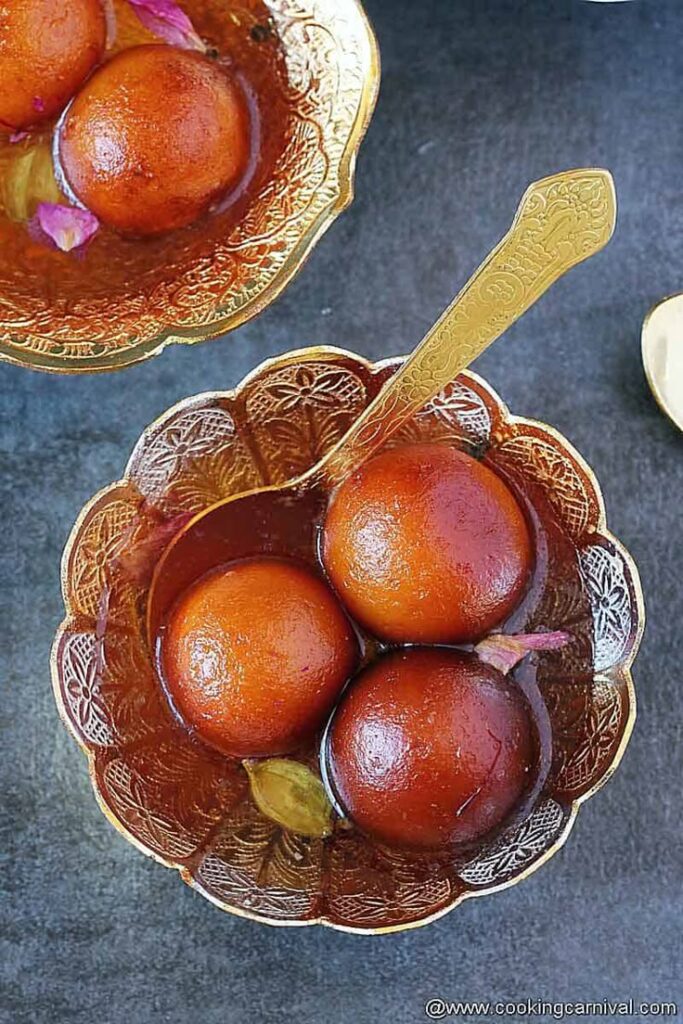

Introduction to Gulab Jamun
Gulab Jamun is one of the most loved traditional desserts of South Asia, famous for its soft texture, rich sweetness, and fragrant sugar syrup. These golden-brown milk-based balls soaked in flavored syrup are a must-have at weddings, festivals, and celebrations. Gulab Jamun represents warmth, hospitality, and indulgence, making it a timeless dessert enjoyed across generations.
Origin and Cultural Significance
The roots of Gulab Jamun can be traced back to Persian and Mughal cuisine. The word gulab refers to rose-scented syrup, while jamun describes the shape and color similar to a local fruit. Over time, the recipe evolved using regional ingredients like milk solids and became a staple sweet dish in the Indian subcontinent. Today, Gulab Jamun is considered a symbol of celebration and joy.
What Makes Gulab Jamun Special
Gulab Jamun is unique because of its melt-in-the-mouth texture and perfectly balanced sweetness. The combination of a soft interior and lightly crisp exterior, followed by soaking in warm syrup, creates a luxurious eating experience. The aroma of cardamom and rose water enhances its appeal and makes it instantly recognizable.
Main Ingredients Overview
Milk Solids Base
Traditionally, Gulab Jamun is made using khoya, which is reduced milk solids. Khoya gives richness and a creamy texture to the jamuns. In modern variations, milk powder is often used as a convenient alternative while still achieving excellent results.
Binding and Flavoring Ingredients
All-purpose flour or semolina is added in small amounts to bind the dough. Baking soda is used sparingly to make the jamuns soft and light. Cardamom powder adds a gentle aroma, while ghee or oil is used for deep frying.
Sugar Syrup Preparation
The sugar syrup is prepared by boiling sugar and water until slightly thick but still flowing. Cardamom pods, rose water, or kewra essence are added to infuse fragrance. The syrup should be warm, not hot, when the fried jamuns are added so they absorb it evenly.
Dough Preparation
Khoya or milk powder is mixed gently with flour and baking soda. Milk is added gradually to form a soft, smooth dough. The dough should not be kneaded too much, as overworking can make the jamuns hard. Resting the dough for a few minutes helps achieve a better texture.
Shaping the Jamuns
Small portions of dough are rolled between palms to form smooth, crack-free balls. Proper shaping is important because cracks can cause the jamuns to break while frying. The balls should be small, as they expand after soaking in syrup.
Frying Technique
Temperature Control
Gulab Jamuns are fried on low to medium heat. Oil or ghee that is too hot will brown the jamuns quickly while leaving the inside uncooked. Slow frying allows even cooking and a uniform golden color.
Achieving Even Color
The jamuns are stirred gently during frying to ensure even browning on all sides. They should be fried until they reach a deep golden-brown color, which gives them their signature appearance and flavor.
Soaking Process
Freshly fried jamuns are added directly to warm sugar syrup. They are left to soak for several hours, allowing the syrup to penetrate fully. During this time, the jamuns double in size and become soft, juicy, and flavorful.
Texture and Flavor Profile
Perfect Gulab Jamun is soft, spongy, and moist from the inside, with a delicate outer layer. The flavor is rich and milky, balanced by fragrant sweetness. The hint of cardamom and rose elevates the dessert without overpowering it.
Serving Suggestions
Gulab Jamun can be served warm or at room temperature. It pairs well with vanilla ice cream for a modern twist. It is often garnished with chopped nuts like pistachios or almonds for added texture and visual appeal.
Popular Variations
Different variations of Gulab Jamun exist across regions. Some versions use paneer instead of khoya, while others stuff the jamuns with nuts or coconut. Kala Jamun is a darker version with a slightly crisp outer layer and richer taste.
Common Mistakes to Avoid
Using too much flour can make jamuns hard. Frying on high heat can cause uneven cooking. Adding jamuns to very hot syrup may shrink them instead of allowing proper soaking. Careful temperature control is essential at every step.
Nutritional Perspective
Gulab Jamun is a rich dessert high in calories due to milk solids, sugar, and frying. It provides energy and calcium but should be enjoyed in moderation as part of a balanced diet.
Why Gulab Jamun Is Universally Loved
The universal love for Gulab Jamun comes from its comforting sweetness, soft texture, and emotional connection to celebrations. Its simple ingredients and unforgettable taste make it a dessert that never goes out of style.
Conclusion
Gulab Jamun is more than just a sweet dish; it is a celebration of tradition, flavor, and craftsmanship. From its rich milk base to its fragrant syrup, every element contributes to its timeless appeal. Whether enjoyed at a festive gathering or as a special treat, Gulab Jamun continues to bring happiness and sweetness to every occasion.