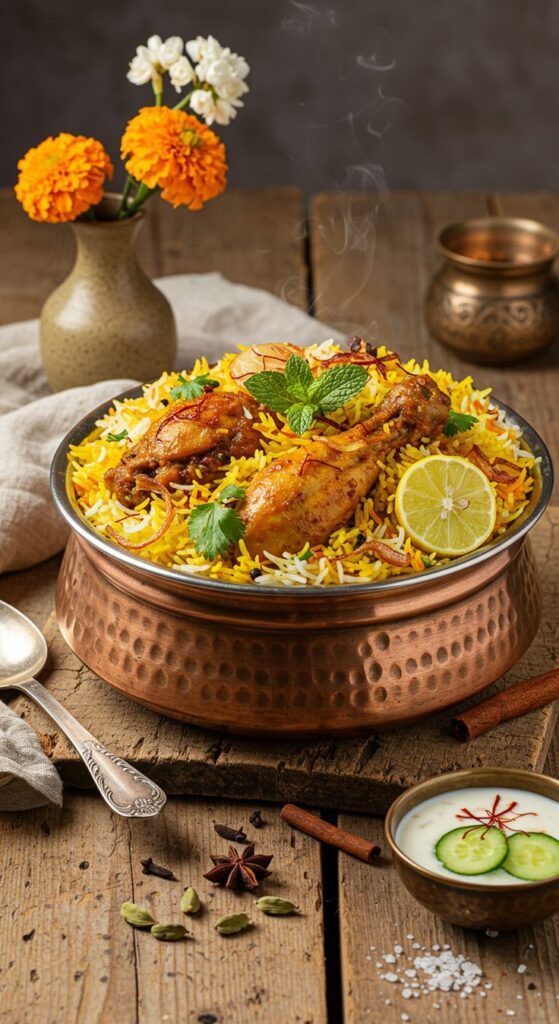

Introduction to Biryani
Biryani is one of the most iconic and beloved rice dishes in South Asian cuisine, known for its rich aroma, layered flavors, and royal history. This dish combines long-grain rice, tender meat or vegetables, aromatic spices, and herbs cooked together using a special technique that allows each grain of rice to absorb flavor. Biryani is not just food; it is an experience that represents celebration, tradition, and culinary craftsmanship.
Historical Background of Biryani
The origins of biryani trace back to ancient Persia, from where it traveled to the Indian subcontinent through traders and emperors. Over time, local ingredients and cooking styles transformed it into a uniquely South Asian dish. Mughal kitchens played a major role in refining biryani into a luxurious meal fit for royalty. Today, biryani is prepared in countless regional styles, each with its own identity and taste.
What Makes Biryani Special
Biryani stands out because of its layering method and balance of spices. Unlike plain rice dishes, biryani involves partially cooking rice and meat separately before combining them. This technique ensures that the rice remains fluffy while the meat stays juicy. The use of whole spices, saffron, fried onions, and fresh herbs creates a deep, complex flavor that cannot be achieved with simple cooking.
Essential Ingredients
Main Components
High-quality basmati rice is the backbone of biryani. Its long grains and natural aroma are essential for authentic results. Meat options include chicken, mutton, beef, or fish, depending on preference. Fresh yogurt is used for marination, helping to tenderize the meat and add richness.
Spices and Aromatics
Whole spices such as bay leaves, cloves, green cardamom, black cardamom, cinnamon sticks, and cumin seeds are crucial for depth of flavor. Ground spices like red chili powder, turmeric, and coriander powder provide color and heat. Fresh ginger, garlic, green chilies, mint leaves, and coriander leaves add freshness and aroma.
Rice Preparation
The rice must be washed thoroughly to remove excess starch and soaked for at least thirty minutes. This step helps the grains cook evenly and remain separate. Rice is then boiled in plenty of water with whole spices and salt until it is about seventy percent cooked. Draining the rice at the right time is essential to avoid mushy biryani.
Meat Marination Process
Marination is a key step that defines the taste of biryani. Meat is mixed with yogurt, ginger-garlic paste, red chili powder, turmeric, garam masala, lemon juice, and salt. Fried onions are added to enhance sweetness and depth. The meat should be marinated for at least two hours, but overnight marination produces the best flavor and tenderness.
Cooking the Masala Base
Frying Onions
Thinly sliced onions are fried in oil or ghee until golden brown and crispy. These fried onions, also known as birista, are divided into portions and used in marination, layering, and garnish. They add sweetness and a distinctive biryani aroma.
Preparing the Meat Layer
Marinated meat is cooked on medium heat until it releases oil and becomes partially tender. Tomatoes may be added in some variations, but traditional biryani relies more on yogurt and spices. The masala should be thick and well-cooked, as excess moisture can affect the final texture.
Layering Technique
Layering is the soul of biryani. A heavy-bottomed pot is used to prevent burning. A layer of meat masala is placed at the bottom, followed by a layer of partially cooked rice. Fried onions, chopped mint, coriander leaves, and saffron-infused milk are sprinkled on top. This process is repeated until all components are used, finishing with a rice layer.
Dum Cooking Method
Dum cooking involves sealing the pot to trap steam and allow slow cooking. The lid is covered tightly, sometimes sealed with dough, to prevent steam from escaping. The biryani is cooked on low heat, allowing flavors to merge beautifully. This gentle cooking method ensures that the rice absorbs aroma without overcooking.
Aroma and Flavor Development
As biryani cooks on dum, steam carries spices and herbs through each layer. Saffron and ghee enhance richness, while mint and coriander keep the dish fresh. When the pot is finally opened, the aroma is intense and inviting, signaling that the biryani is ready to be served.
Serving Style
Biryani is traditionally served hot, gently mixed before plating to maintain layers. It pairs well with cooling sides such as raita, salad, and lemon wedges. Some prefer serving it with curry or gravy, while others enjoy it on its own to fully appreciate its flavors.
Popular Biryani Variations
Different regions have developed their own styles of biryani. Hyderabadi biryani is known for its strong spice profile and dum cooking. Lucknowi biryani is lighter and more aromatic. Sindhi biryani is spicy and tangy, often containing potatoes. Each variation reflects local taste preferences and ingredients.
Common Mistakes to Avoid
Overcooking rice is a common mistake that leads to mushy biryani. Adding too much water or stirring excessively can ruin texture. Using low-quality rice or skipping marination also affects flavor. Patience and attention to detail are essential for perfect biryani.
Nutritional Perspective
Biryani is a complete meal containing carbohydrates, protein, and fats. Meat provides protein, rice supplies energy, and spices offer antioxidants. When prepared with balanced oil and portion control, biryani can be enjoyed as part of a healthy diet.
Why Biryani Is Loved Worldwide
Biryani’s universal appeal lies in its rich taste, beautiful presentation, and cultural significance. It brings people together at celebrations, weddings, and family gatherings. Its versatility allows endless customization, making it suitable for different palates and dietary preferences.
Conclusion
Biryani is a timeless dish that showcases the art of slow cooking and spice blending. From its historical roots to modern variations, it continues to capture hearts across the world. With the right ingredients, careful preparation, and patience, biryani becomes more than a recipe, transforming into a memorable culinary experience.